Black oxide services
Black oxide is available for steel, stainless steel and copper. It is usually specified for the finish itself — an even, matte black — with mild corrosion resistance as a secondary benefit. Sealing the converted surface with oil afterwards is what makes the corrosion resistance worth having.
Request a Quote| Surface preparation | Colors | Applicable materials | Cosmetic availability | Thickness** | Visual appearance |
|---|---|---|---|---|---|
| As machined (Ra 3.2μm / Ra 126μin) | Steel, Stainless Steel, Copper | Steel, Stainless Steel, Copper | No | 0-30μm / 0-1181μin | Smooth black matte |
Example of a black oxide part
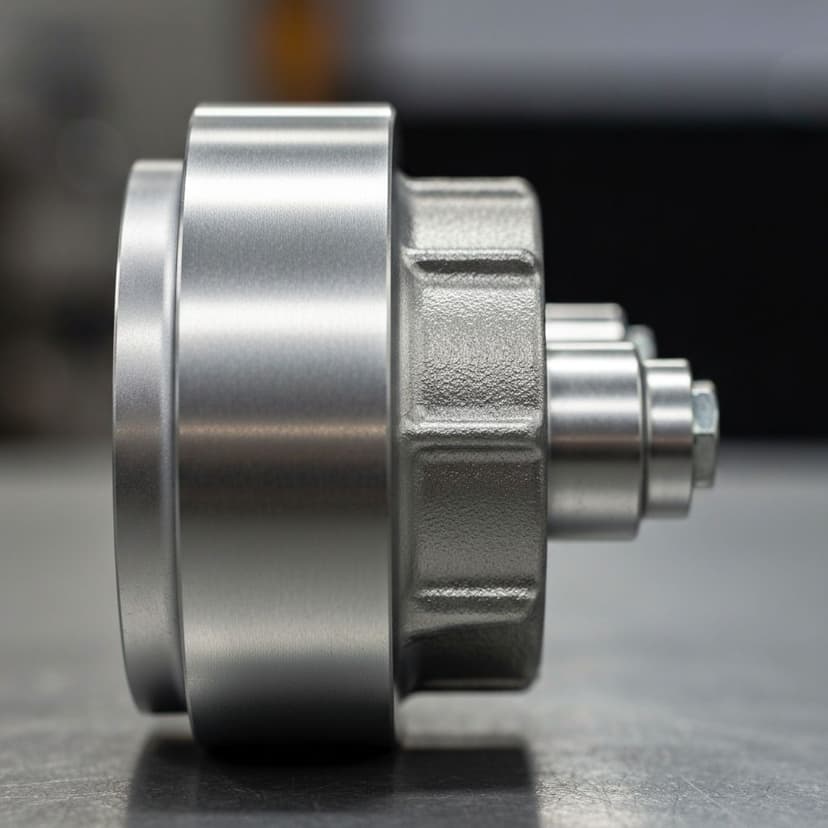 As machined
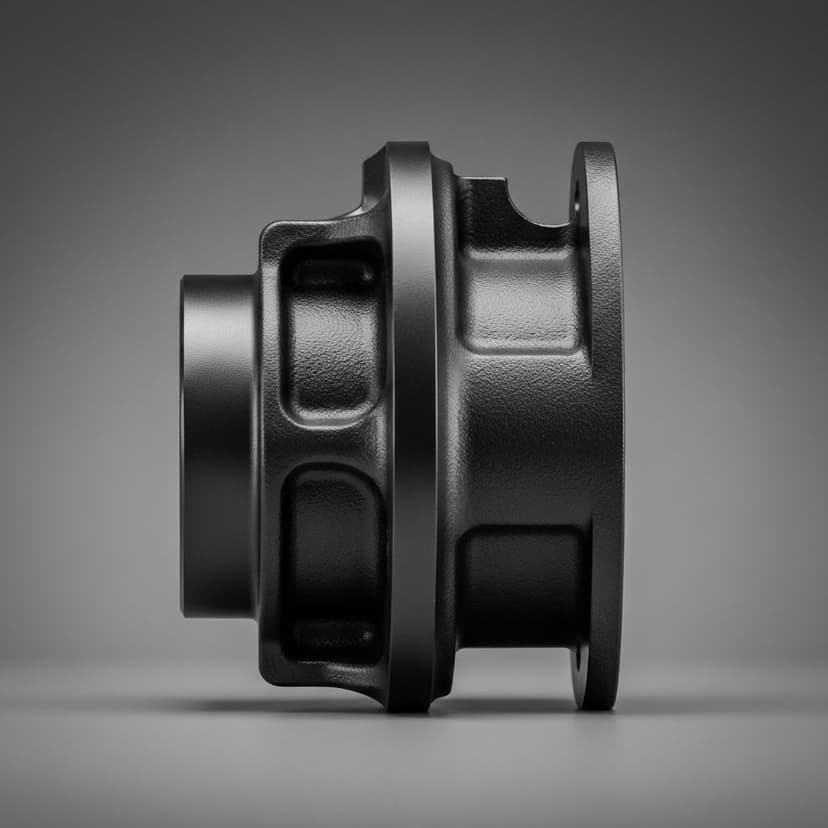 Black oxide
Design considerations for black oxide
Masking: Black oxide does not have a significant dimensional impact, therefore masking parts is not necessary.
The Metal Market black oxide process
The process converts the top layer of the metal rather than depositing a coat onto it. Because nothing is added, the part keeps its dimensions — which is why black oxide suits threads, bores and close-fitting assemblies that a plated finish would tighten.
Here's how to apply black oxide:
- First run parts through machining and deburring.
- Clean parts using alkaline solutions.
- Rinse in water.
- Black oxidizing. Immerse the part in the hot (135-145ºC) alkaline bath for a period of 5 to 40 minutes depending on the size of the part.
- Rinse in water.
- After-finish treatment. Seal the oxide surface with oil, lacquer or wax. This imparts the desired aesthetic appearance and improves the corrosion resistance of the component.
Step 1
Alkaline cleaner
Step 2
Hot rinse
Step 3
Black oxide
Step 4
Cold rinse
Step 5
Rust preventative
Step 6
Finished part