Brushed + Electropolished (Ra0.8µm, 32µin)
Electropolishing removes metal rather than adding it, taking the peaks off a surface faster than the valleys. What is left is brighter, measurably smoother — up to around 10µm comes off stainless — and easier to keep clean, because there is less texture for anything to hold onto.
| Requirement | Specification |
|---|---|
| Surface preparation | Brushed |
| Color | Natural metal color |
| Part masking | Indicate masking requirements in technical drawing |
| Cosmetic availability | Cosmetic by default |
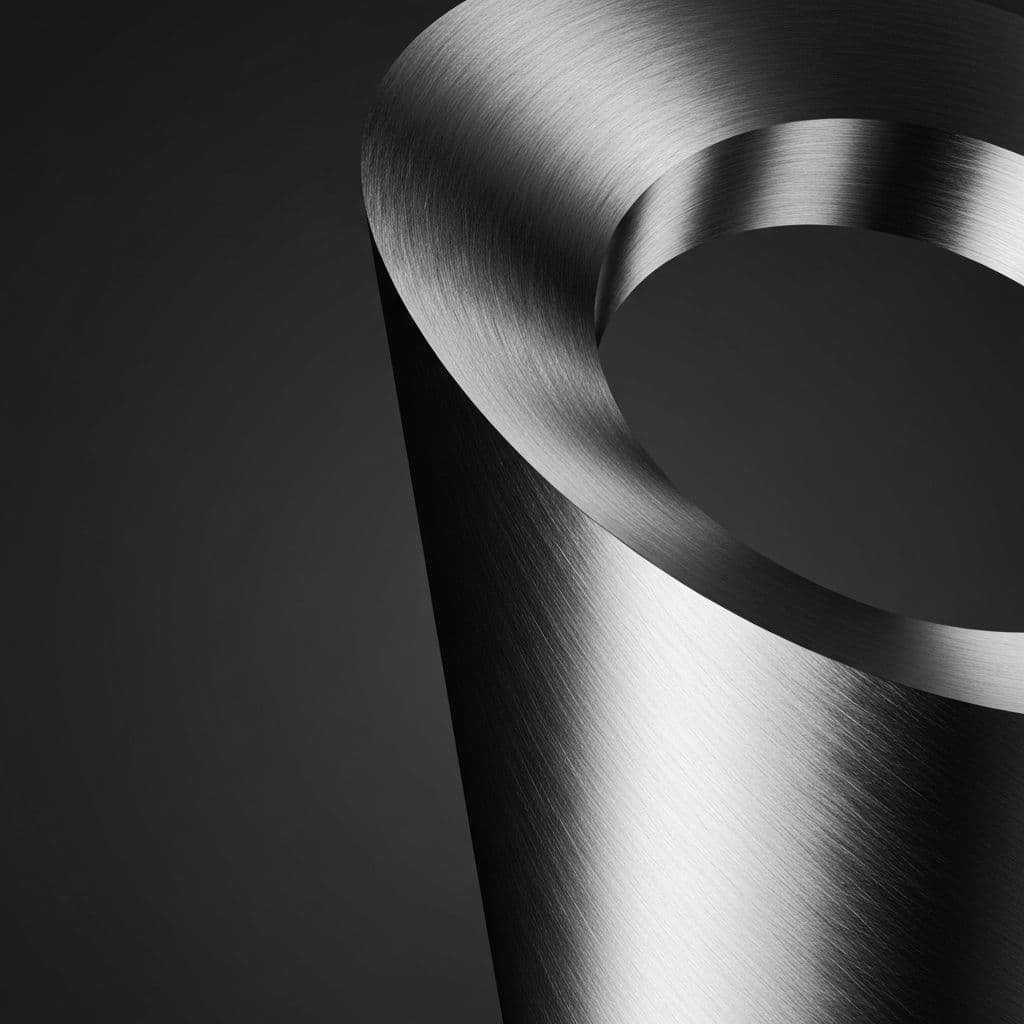
Example of a brushed + electropolished part
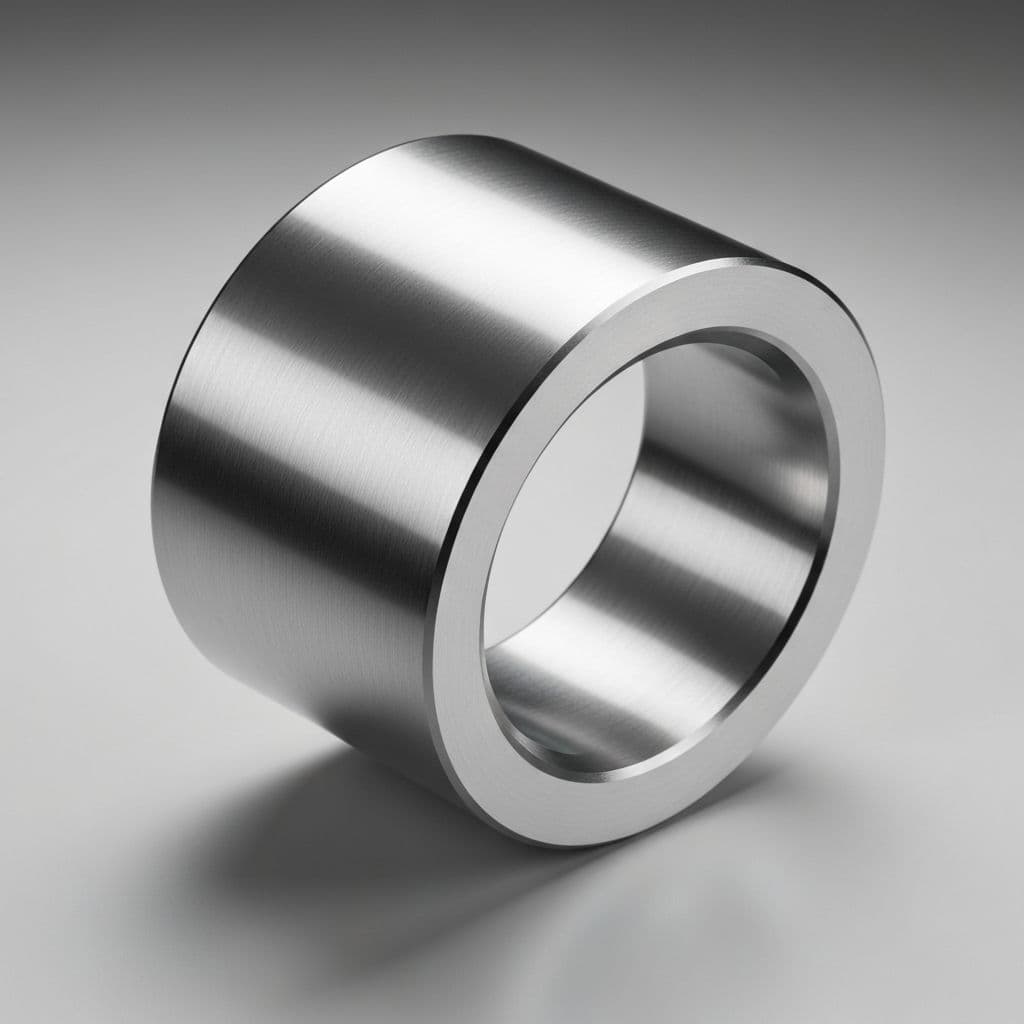
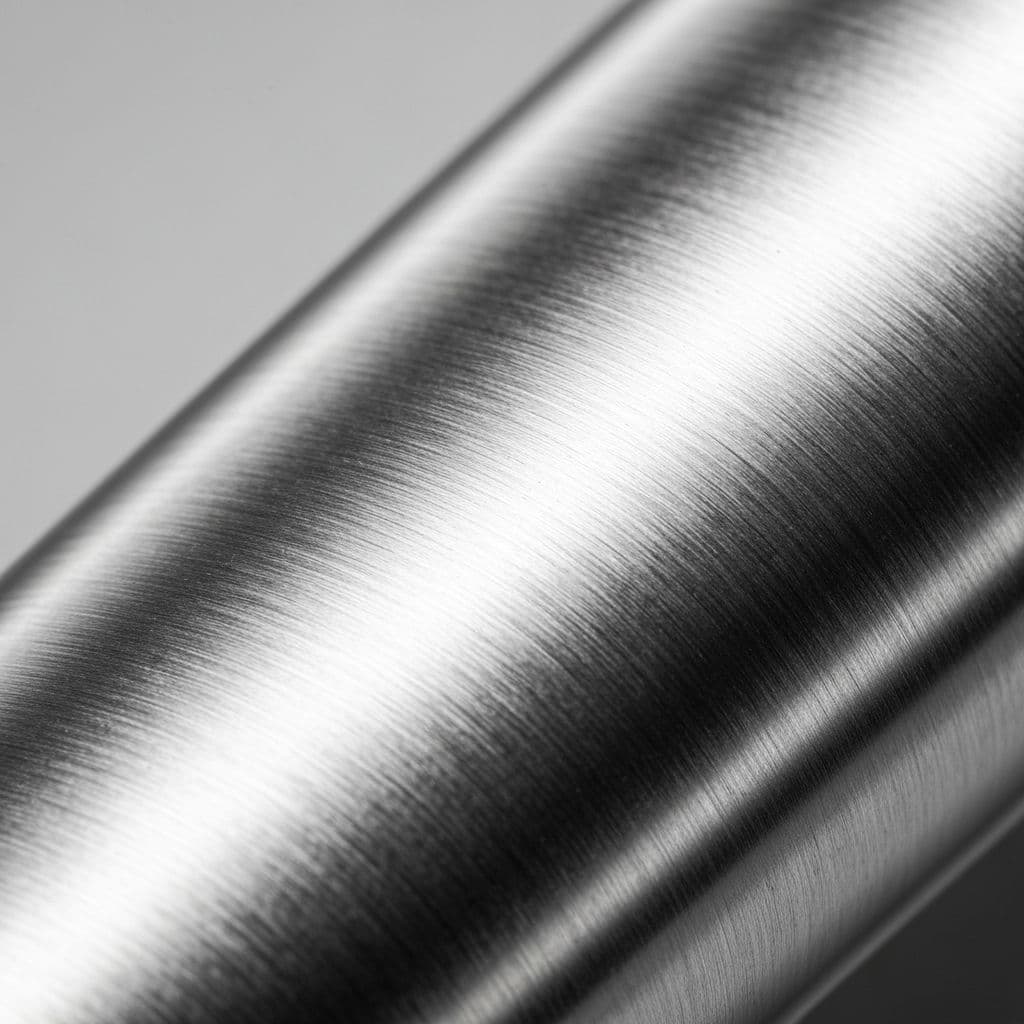
The Metal Market brushing + electropolishing process
Here's how to apply brushing and electropolishing:
The part's surface is cleaned and prepared by power brushing
The part is wired as the anode and lowered into an electrolyte bath, with a cathode suspended alongside it.
Current pulls metal ions off the part and into solution, and it pulls them fastest from the high points — which is what does the smoothing
Parts are then rinsed from the electrolyte solution in a different tank
A nitric or citric passivation dip follows, then a cold rinse and dry, which restores the protective oxide film
Electrolyte Solution